1. Consumption
First, we changed the away of consuming it, there was the vinyl then the CD and today we listen to musique on our phones. The problem with listening to music on the internet is that we can get all the music we want for free and artists don't sell their album on a CD as they use to.
Here is an animation that was published by Kevin Short in the Huffigton post's website. It illustrates the evolution of music consumption, as it is very complicated because there's been many ways to consume music, we'll focus on the CD and internet downloading parts.
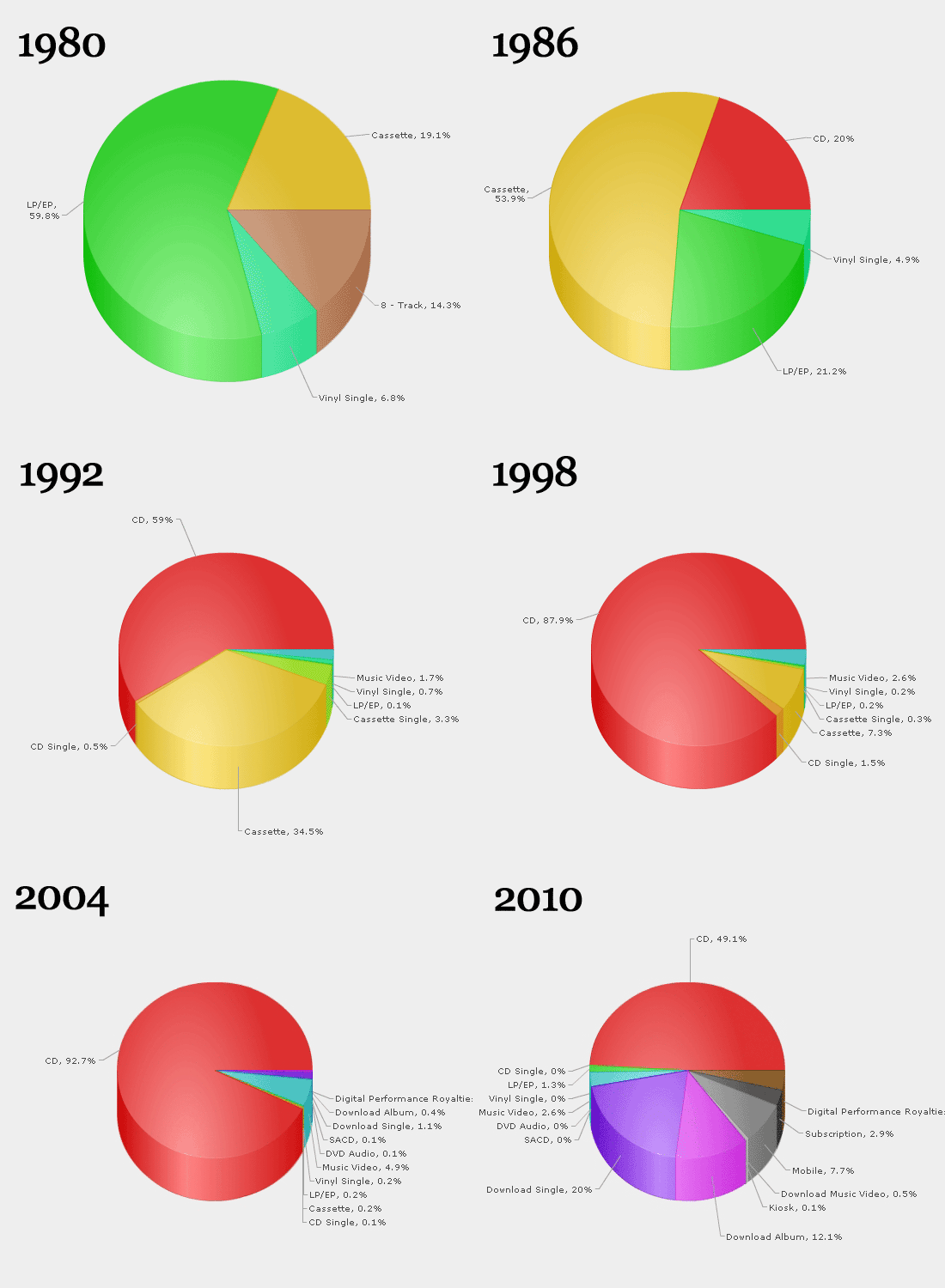
Since the CD appeared in 1983, it didn't stop growing and more and more people started to consume music with CDs. It is in 2002 that it reached its climax, 94% of music was consumed on CDs. 2002 is also the year were the CD started to drop, because it is the year internet downloading appeared even though it took only 2% of music consumption at the time. But downloading grew faster and faster because it can be consumed on a computer, a phone, a tablet or an Ipod. In 2010 downloading takes more or less 45% of music consumption, CD takes 49%. Today, consumption on electronic devices is for sure bigger than consumption on CD. My point is that CD was something material that people would buy, and this is what would make money for the music industry but as today music is more and more consumed freely on the internet, it is a problem for the quantity of money that the music industry makes. We can't say that music dropped in quantity because we have to precise what; if we're talking of music consumption itself, the quantity of people listening to music is always growing as it is more and more accessible. But if we talk about money, the quantity of wealth created is dropping.
2. Music quality
What is High-Resolution Audio?
High-Resolution Audio is audio that uses a higher sampling rate than in CDs and MP3s for the encoding and playback of music. Higher sampling rates mean that more samples per second were taken when the original analog sound was converted into digital.
High-Resolution Audio files have a sampling frequency of 96 kHz/24 bit, which is significantly higher than the 44.1 KHz/16 bit sampling frequency of CDs.
How does that translate to the listening experience?
Listening to High-Resolution Audio allows you to pick up on the subtle details and nuances that you would hear in a recording studio. So, if you’re waiting to get your hands on Adele’s newly released album, “25”, try listening to it in high resolution. It’ll sound like you pulled up a stool next to the British diva, allowing you to hear every note of her soulful, impressive range.
On the other hand, when you convert analog sound to digital formats like CDs and MP3s, that process can compromise the purity of the original signal. High-Resolution Audio brings your favorite songs to life by retaining more data during the analog-to-digital conversion process.
To conclude, music did huge progress, it evolved in many genres, the quality of the sound is way better today than before and more and more people have access to it. But downloading is a problem to music industry. Will it always be a problem ? or could music industry find a way to make money on these downloading ?
Sources: - https://www.huffingtonpost.com/2014/08/22/music-industry-shift-gif_n_5697945.html
- https://www.sony.com/electronics/hi-res-audio-mp3-cd-sound-quality-comparison
